Stackable Chairs or Reclining Loungers for Small Patio Seating
Limited outdoor space changes the way seating should be chosen. A chair that feels generous on a terrace can crowd a balcony, and a lounger that looks inviting beside a pool may turn a narrow patio into an obstacle course. The choice often comes down to stackable chairs or reclining loungers, two very different answers to the same problem: how to make a small area useful, comfortable and easy to move through.
Stackable chairs are the practical option when the patio needs to serve several purposes. They suit dining, casual drinks, reading, plants, and the simple need to pull up a seat without rearranging the whole space. Their main advantage is flexibility. When not in use, they can be stacked and stored against a wall, under a cover, or in a shed, leaving the floor area open. Reclining loungers take a different approach. They give one person a longer, more relaxed place to sit, often with an adjustable back or footrest. They are better for lingering outdoors, but they usually stay in position and ask for more clearance space around them.
Start with the way the space is used
Before comparing shapes, think about what the patio needs to do. A small seating area beside a kitchen door may be used for quick meals, morning coffee, or extra seats when friends come over. In that case, stackable chairs make sense. They let the same space host two people or four without permanent clutter. A quiet balcony with room for one person and a small table may suit a compact reclining lounger more. The goal there is not capacity, but comfort.
It helps to divide the space into layout zones. One zone might be for eating, one for reaching the door, and one for moving past a planter or grill. Seating should support those zones rather than take them over. A chair footprint is usually easier to plan around because it stays fairly consistent. A reclining lounger changes shape as it adjusts, so the space behind the backrest and in front of the foot area matters as much as the base size.
Traffic flow is another quiet deciding factor. On a narrow terrace, people need a clear route from the door to the table, the pool steps, or a gate. Stackable chairs can be tucked in or moved aside. Loungers tend to sit low and long, which can make the route feel blocked even when there is technically enough room. If the space is shared by children, pets, or people carrying dishes, fewer obstacles usually make daily use easier.
What stackable chairs do well
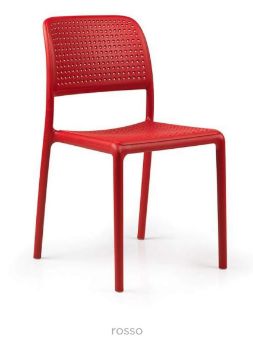
Stackable chairs are built around efficient storage and simple placement. Their frame and seat design allows one chair to sit neatly inside or above another. That matters in a small patio where a row of loose chairs would otherwise take over the whole area. Resin seating can be a useful fit here because the material is commonly used for outdoor furniture and can be wiped down after rain, dust, or pool splash.
They are also easy to mix with different layouts. A pair can sit at a bistro table, four can form a small dining set, and extras can be brought out only when needed. This makes them a good match for a balcony or terrace that changes use through the day. A space used for lunch can become a reading corner later without a complete furniture shuffle.
The trade-off is comfort. Many stackable chairs support a normal upright seated position, which is fine for meals and conversation but less restful for long afternoons. Cushions can help, though they add storage questions of their own. The stack should also be checked carefully. Some designs nest compactly but become awkward once cushions, armrests, or wide frames are involved. Stacking height matters if chairs are kept in a corner where they might lean, wobble, or block a view.
Another point is stability. A lightweight chair is easier to move, but it can shift on slick paving or a breezy balcony. Look for a broad base, steady legs, and a shape that feels settled when someone sits down or leans forward. For resin furniture, smooth edges and molded detail can be practical in tight spaces where people brush past seating often.
What reclining loungers do well
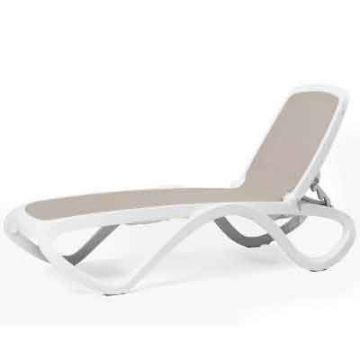
Reclining loungers are made for staying put. They invite a slower pace: reading, sunbathing, resting after a swim, or sitting outside without needing a table in front. In a compact patio, one lounger can feel more valuable than several upright chairs if the main aim is relaxation. Adjustable backs let the user shift from sitting to lying down, which makes the seat useful at different times of day.
They also create a clear purpose for a small corner. A lounger beside a low side table can turn the edge of a terrace into a personal seating spot. This works especially well where the available space is long and narrow rather than wide. Instead of trying to fit a dining group, the layout can focus on one comfortable position with enough room to extend the legs.
The limitation is space. A reclining lounger needs room for the full body, plus extra room for adjustment and access. If it sits close to a wall, the back may not open comfortably. If it faces a table, the foot area may intrude into the walkway. Poolside products often need careful placement as well, since wet feet, towels, and splashes can make the surrounding floor slick. A lounger should not force people to squeeze past it on a narrow route.
Storage is a bigger question with loungers. Some fold or stack, while others are meant to remain outdoors for the season. In a small space, that difference can shape the whole decision. A lounger that cannot be moved easily may become the fixed center of the patio, so its placement should be chosen with care. A model that folds flat can be more forgiving, but it still needs somewhere to go when not in use.
Material and maintenance in tight spaces
Resin outdoor furniture is often considered where durability and easy care matter. In a compact patio, furniture is exposed to the same rain, sun, and dust as anywhere else, but there is less room to move it around. A surface that can be wiped clean without a long process is useful. Resin chairs and loungers also tend to have simple shapes that fit close to walls or railings, though exact designs vary.
Maintenance should be judged in ordinary use, not just at purchase. Cushions need drying and storage. Metal parts may need attention if finishes are chipped. Wood can need periodic care depending on the finish. Resin pieces still benefit from routine cleaning, especially around joints and textured surfaces where dirt can settle. None of this should turn seating into a chore, so the best choice is often the one that matches the owner's willingness to care for it.
Where a site such as outdoor-resin-furniture.com fits into the picture is in the range of durable resin outdoor furniture it describes, including chaise lounges, chairs, dining furniture, benches, swings, and poolside products. That kind of range shows how broad outdoor seating can be, even when the available area is modest. The useful point for a small patio is not to fill every category, but to pick the few pieces that earn their place.
Measuring before choosing
Small spaces punish guesswork. Measure the width of the patio, the depth from the door or railing, and the route people use most often. Then mark out the seating area on the ground with tape or cardboard. This gives a clearer sense of how a chair or lounger will sit in the space. It also shows whether a door can open fully, whether a table can be pulled out, and whether a person can stand up without stepping into a planter.
Allow for more than the furniture itself. A dining chair needs room to slide back. A reclining lounger needs room to open and close. A stack of chairs needs a stable home that does not become a trip hazard. Clearance space should be treated as part of the seating plan, not as leftover space. On a balcony, also check what can pass through the access point, since delivery and daily movement may be more awkward than in a garden.
Weight matters too. Resin furniture is often chosen for outdoor use, but individual pieces still differ. A chair that can be lifted easily may be moved often. A heavy lounger may stay steady but become difficult to reposition after rain or before a gathering. For anyone who likes to change the layout regularly, stackable chairs are usually easier to handle.
When each option suits best
Stackable chairs suit patios that need more than one use. They are a strong match for small dining areas, balconies with a compact table, terraces used by more than one person, and homes where seating needs to disappear quickly. They also suit anyone who values order. A clear patio feels larger, and chairs that can be stacked make that easier to achieve.
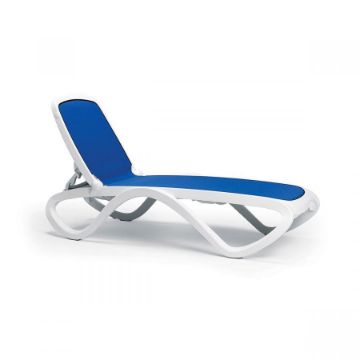
Reclining loungers suit spaces where comfort is the main purpose. They fit best beside a pool, on a sunny terrace edge, or in a quiet corner where one person can stretch out. They are less about hosting and more about making a small outdoor spot feel restful. A single lounger with a side table can be a better use of a narrow area than a cramped dining set that never feels comfortable.
Some patios can hold both, but only if the layout is planned with restraint. One lounger plus two stackable chairs may work where four loungers would overwhelm the area. The key is to keep routes open and avoid filling the patio just because there is room for another piece. Small patio seating works best when each item has a clear job and a clear place to rest, stack, or recline.
The final choice rests on routine. If the space is used for meals, visitors, and quick moments outdoors, stackable chairs offer the cleaner fit. If it is used for long, quiet stretches outside, a reclining lounger may be worth the space it takes. Measure the area, picture the daily movement, and choose the seating that makes the patio feel easier to use rather than more crowded. outdoor-resin-furniture.com describes durable resin outdoor furniture for settings like these, and the same practical lens applies wherever the pieces are placed.